
NEWS
2026
The People Who Bring
Village Health Back to Life
Reactivating dormant village health posts in rural Lampung, Indonesia.
Together with the Kader.
Where
Where We Work
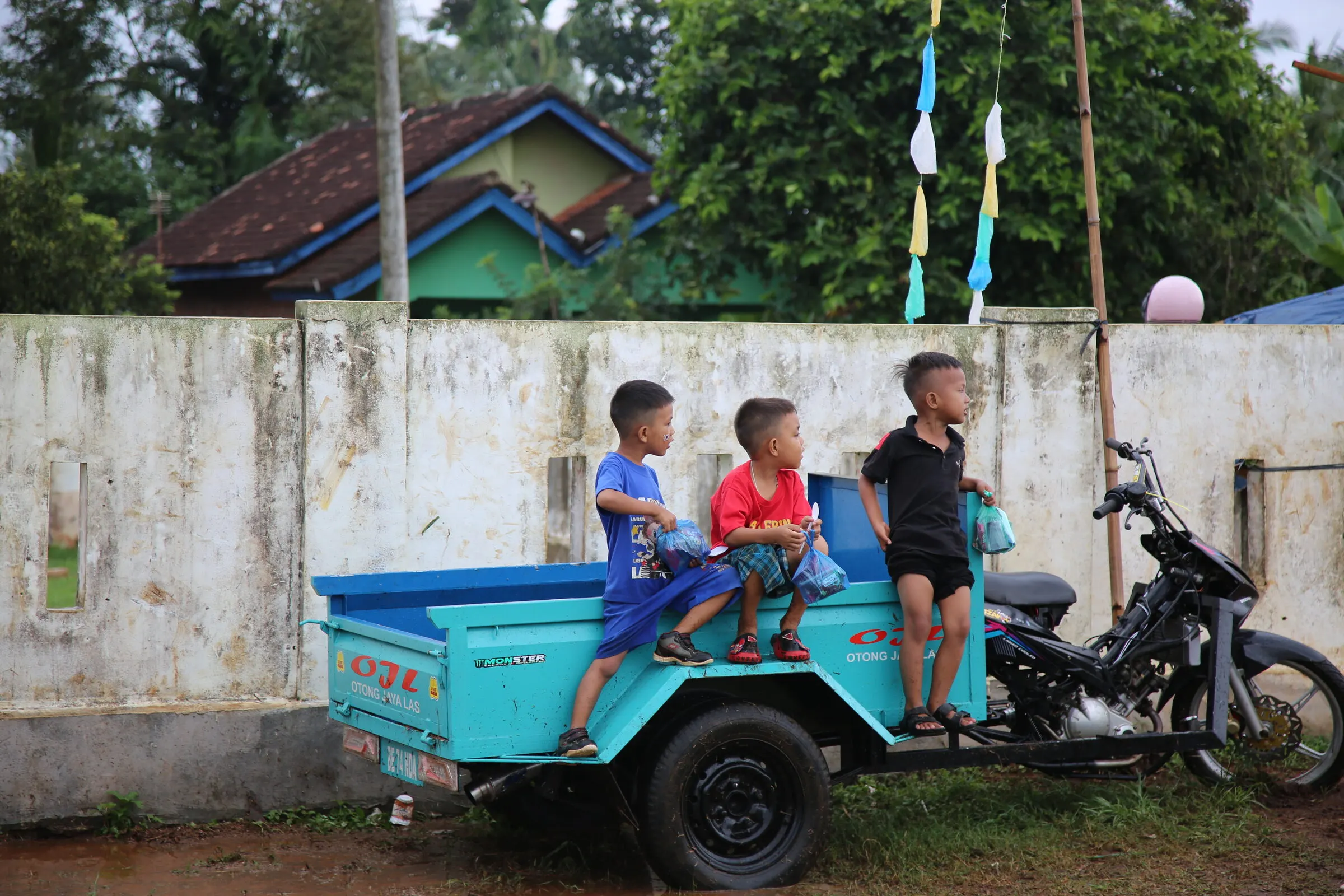
At the southern tip of Sumatra in Indonesia lies Lampung Province, and within it the rural district of Lampung Timur — home to our two project villages, Purwo Kencono and Batu Badak.
Hub Hospital
Mardi Waluyo Hospital
Kota Metro · Class C General Hospital · 19-year partnership
Target Village 1
Purwo Kencono
Lampung Timur · 1,350 households
Target Village 2
Batu Badak
Lampung Timur · 800 households
Lampung Province
9.52 million
As of 2025 · 60.8% outpatient non-utilization
Why · Inequity
Same Province,
Different Realities
A mere hour's drive separates urban Kota Metro from rural Lampung Timur — yet the healthcare gap is more than fourfold. Under the same provincial government and the same policies, this disparity persists because the system simply does not reach the countryside.
Maternal Mortality (2024)
Among Lampung's 17 districts: Kota Metro lowest, Lampung Timur 3rd highest
In Kota Metro, not a single mother is lost. In rural Lampung Timur, 13 women die in childbirth every year.
Hypertension Treatment Coverage
Share of patients receiving regular care
Nearly half of hypertensive patients in the countryside are left without regular treatment.
Villages Meeting All 5 Sanitation Standards (STBM*)
Latrines · handwashing · safe drinking water · solid waste · liquid waste — villages meeting all five
Every urban village in Metro meets the national sanitation standard; not a single rural village in our project area has yet reached this milestone.
* STBM (Sanitasi Total Berbasis Masyarakat) — an Indonesian government policy built on five community-based sanitation pillars: ① ending open defecation, ② handwashing, ③ safe drinking water, ④ household solid waste, ⑤ liquid waste management.
Annual Health Budget Per Capita
Converted to USD, 2024
The city's per-capita health investment is four times higher than rural areas ($49 vs. $12) — leaving rural residents behind.
"One hour away by car —
but four times further from healthcare."
Source: Lampung Province Health Profile 2024 · 6 key indicators compared between Kota Metro and Lampung Timur
Diagnosis
Why the System Has Stalled
Rural healthcare fails at the intersection of two critical gaps: a supply-side breakdown in service delivery, and a demand-side barrier to access. When both axes fail at once, the Kader–Posyandu system ceases to function.
Supply Side
Fractured Referral Chains
On paper, a patient identified at a Posyandu should be referred upward through the Pustu and Puskesmas to a hospital. In rural areas, however, post-referral follow-up is almost non-existent — Kader (Community Health Workers) lose all visibility once a patient is referred upward.
"The referral system exists on paper,
but patients disappear in the gaps."
Hypothesis H3 — Broken referral chain (to be verified through field research)
Demand Side
Mothers Don't Get to Decide Their Own Care
85.7% of maternal deaths in Indonesia involve all three of the Three Delays (Thaddeus & Maine, 1994) stacking together — and the most frequent bottleneck occurs at the First Delay: "who inside the home gets to decide." Cultural dynamics often place that decision with the husband or the mother-in-law, rather than the mother herself.
Hypothesis to verify through field research — women's lack of decision-making authority over their own care
"No path to send her along,
and no one with the power to decide."
Solution
The Answer Is Already There —
The Kader
The Kader are Indonesia's government-designated village health workers, and the WHO recommends the same model as the answer for rural health. Indonesia already has ~1.5 million Kader and 338,881 Posyandu nationwide. Our work is not to build from scratch, but to revitalize what is currently dormant.
Active Kader Nationwide
The Inactivity Challenge — share of inactive Kader, per 100
With 31% currently inactive and 77% below national competency standards, reactivating this existing workforce is the single most effective way to transform rural health.
Evidence-Based Impact
Prior study (Yani et al. 2023, n=1,100)
Structured training is a proven catalyst — research shows it directly correlates with a significant rise in facility visits and Posyandu attendance. The WHO endorses integrating CHWs into the formal health system.
Principle · Our Approach
Building From Within —
Localization
Working under Indonesia's New Health Law (UU 17/2023) and Integrated Primary Healthcare (ILP) policy, we focus on dismantling the obstacles that hold the existing Kader–Posyandu–Puskesmas system in place. This aligns directly with Korea's 4th Mid-Term ODA Strategy (2026–2030), which prioritizes the use of partner-country infrastructure to ensure long-term local ownership.
What We Don't Do
Build New Facilities or Parallel Systems
- · Avoid Parallel Systems — We do not build new clinics with external funding
- · No Model Transplantation — We do not transplant Korean healthcare models
- · Minimal Expatriate Presence — We do not station expatriate staff on the ground
- · Zero External Dependency — We do not create systems that depend on outside aid after the project ends
What We Do
Reactivate the Existing System
- · Strengthen National Competencies — Reinforce training to meet Indonesia's 25 official Kader competencies
- · Community-Led Decision Making — Co-decide with the people already on the ground: village women's groups, village heads, health centers
- · Cultural & Linguistic Adaptation — Adapt Bahasa Indonesia materials with local Lampung dialect, teaching in the village's own language
- · Financial Sustainability — Link to the village's own budget (Dana Desa), so the system continues running after the project ends
"The people already there,
using the resources already there,
working again."
Where & With Whom · Lampung and Our Partners
Our Local Partner: Mardi Waluyo Hospital
MediAccess (formerly CMN) has partnered with Mardi Waluyo Hospital since 2007. Nineteen years of trust, interpretation support, administrative cooperation, and local networks form the foundation of this project.
Long-Standing Local Partner
Mardi Waluyo Hospital
RS Mardi Waluyo
YAKKUM Foundation · Class C General Hospital
19 Years
of partnership with MediAccess
Located in Kota Metro, Mardi Waluyo Hospital is a secondary-care institution that runs its own UPKM Community Health Promotion Team — an interdisciplinary team of physicians, nurses, nutritionists, pastoral counselors, and outreach staff. The team has served the community through home visits, medical outreach, housing improvements for vulnerable households, and drinking-water well construction.
In this project, the hospital serves as the final destination of the referral chain, working alongside MediAccess.
Three Layers of Policy, One Direction
Recipient-Country Policy
Indonesia
- · New Health Law (UU 17/2023)
- · ILP Decree (KMK 2015/2023)
- · National Health Strategic Plan (RIBK 2025–2029)
- · National Medium-Term Development Plan (RPJMN)
- · Village Fund Priorities (Permendes 16/2025)
Korean ODA
Republic of Korea
- · 4th Mid-Term ODA Strategy (2026–2030)
- · Health as a priority sector
- · Leveraging existing partner-country infrastructure
- · Indonesia — ASEAN's largest population, Korea's priority partner
Global Goals
SDGs · WHO
- · SDG 2.2 — End malnutrition and stunting
- · SDG 3.1 — Reduce maternal mortality
- · SDG 3.4 — Reduce premature deaths from NCDs
- · SDG 3.8 — Universal Health Coverage (UHC)
- · WHO CHW Guidelines (2018)
Lampung Provincial Health Office
Dinkes Provinsi · Provincial health-policy oversight
Lampung Timur District Health Office
Dinkes Kabupaten · District-level policy implementation
Puskesmas Director
Director overseeing the project villages · Kader supervision
Kader
~1.5 million nationwide · the direct implementers of this work
Mardi Waluyo Hospital
Class C General Hospital · final hub of the referral chain
Village Head (Kepala Desa)
Holder of Dana Desa allocation authority · village governance lead
TP PKK
Women's organization spanning village to province · selects and manages Kader
Journey
The Road Behind Us,
The Road Ahead
MediAccess's journey in healthcare cooperation — Lampung is just the beginning.
-
1985
Founding of MediAccess (formerly CMN)
Founded as a medical volunteer group — supporting multicultural families and migrant workers in Korea, and beginning international medical outreach
-
2007
Partnership with Mardi Waluyo Hospital
Launching a 19-year journey of cooperation in Kota Metro — laying the foundation of trust, interpretation, and local networks
-
2025.8
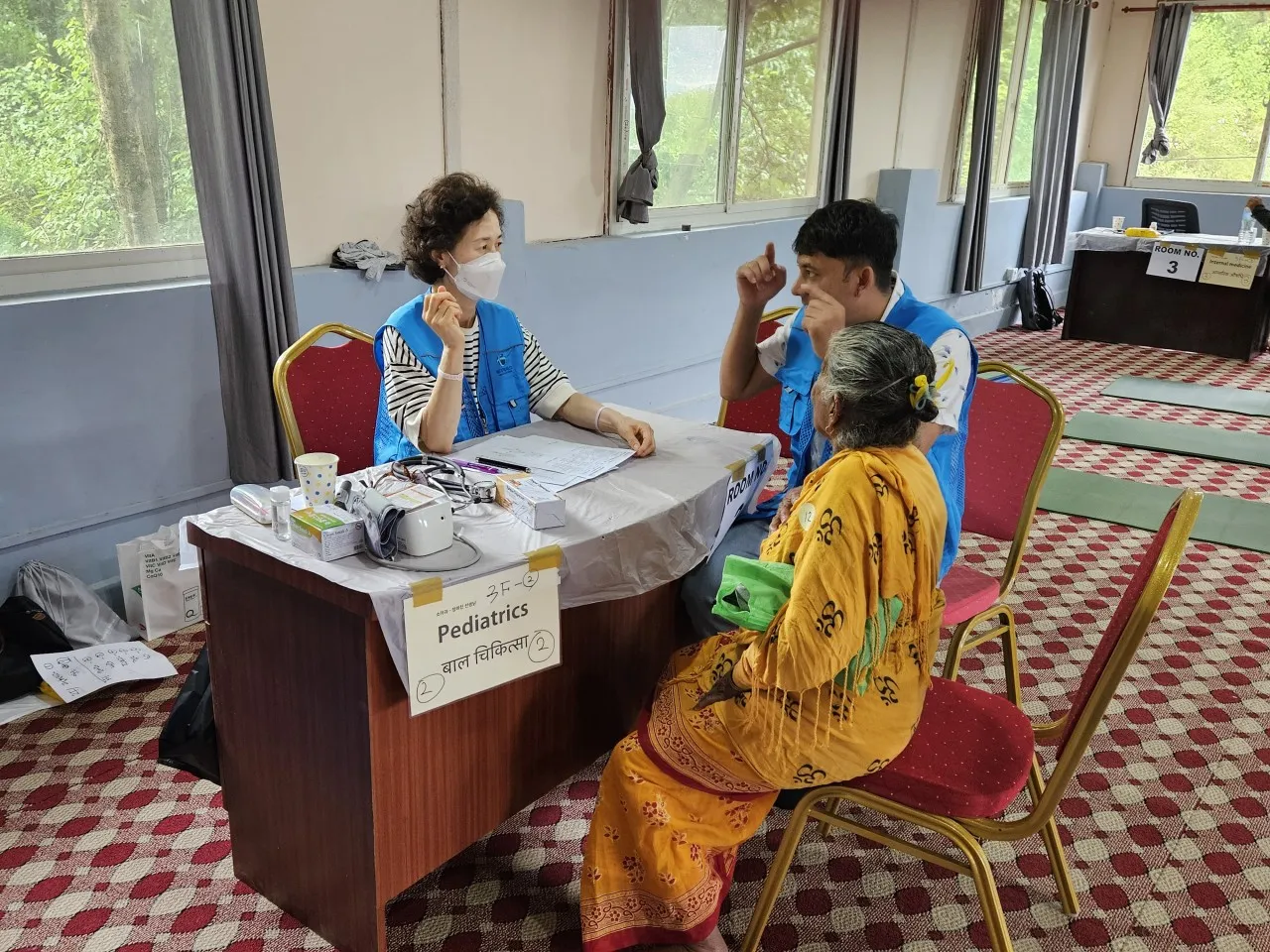
Lampung Medical Outreach — Identifying the Rural Health Gap
Through urban medical outreach we identified critical voids in rural primary care: untreated hypertension and diabetes, low rates of prenatal checkups and infant immunization
-
2026.6
NOW
Field Pre-Assessment
-
2026 H2
Project Launch
We will refine the project plan based on field findings and sign a formal agreement with Mardi Waluyo Hospital
-
2027 →
Iteration and Expansion
Operating across the three pillars — Kader capacity building, Posyandu reactivation, and referral-chain restoration — adapting to field conditions and exploring expansion to neighboring districts